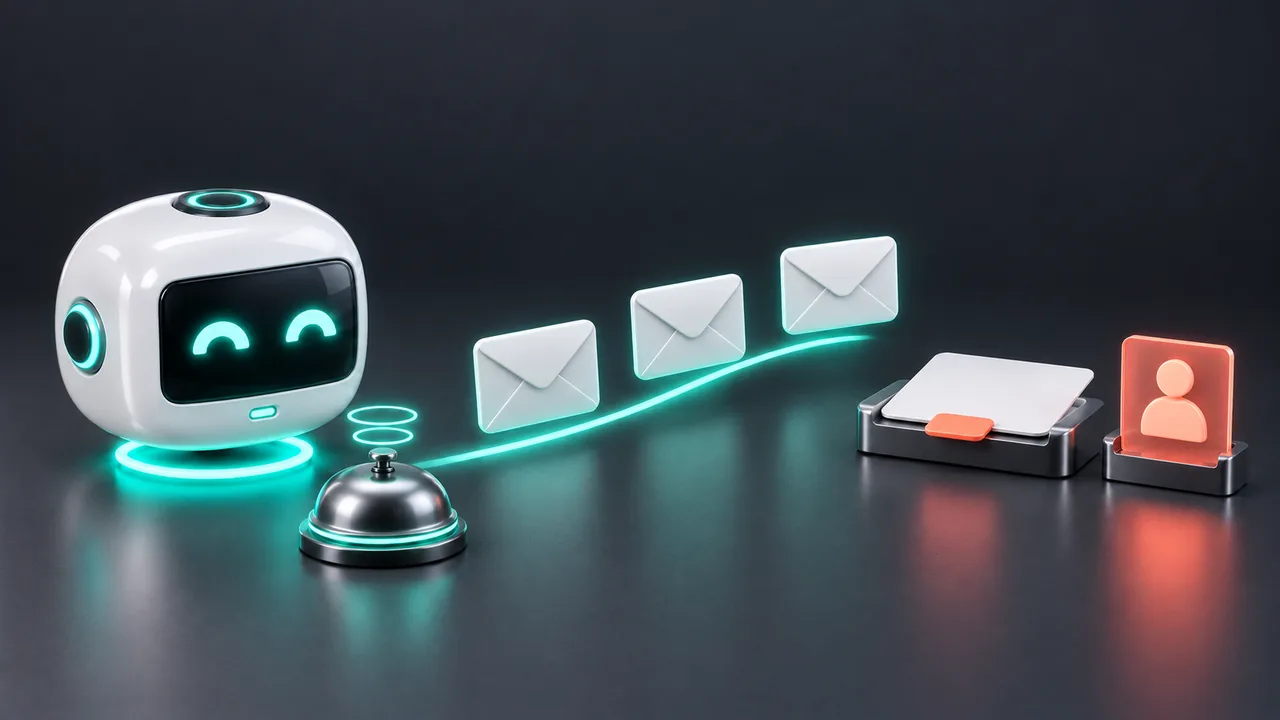
On Halloween, DeepSeek’s Harness team put an MIT-licensed repo on GitHub called dsh-superagent-prototype. It’s a coding agent that watches one GitHub repository. When someone on the allowed list asks it for work, it opens a work item, does the job in its own session and folder, and answers in the same thread, often with a pull request. A small web panel shows anything that needs a person.
A roundup the next day called it “an agent that never clocks off.” That’s a fair headline, if slightly off. DeepSeek’s README never says “always-on.” It says proactive, and adds the limit right away: the agent acts only when someone asks or when a rule the team wrote allows it. The service stays running, and the agent moves when it’s called. I think DeepSeek got that part right.
What DeepSeek shipped
The README calls the code a “research prototype for reference only, not an official DeepSeek product,” says coding agents did much of the engineering, and warns that it may have bugs. It also says the release differs from DeepSeek’s internal version and from a design paper titled “Exploring Super-agent Design: Towards a More Autonomous Agent System,” and that some ideas in the paper aren’t built yet.
According to the roundup, the paper describes an agent that keeps context across sessions and runs several jobs in parallel. I haven’t been able to read the paper itself, so that’s the report’s summary. The repo docs do show that each task gets its own worker session. Long shell commands move to the background after five seconds so the worker can keep reading new messages, and leftover background jobs get 30 minutes after each turn before they’re killed.
My favorite line in the repo is its guiding rule: take as little human attention as possible, and give as much value as possible. An agent that works for a whole team can also waste a whole team’s attention, so this one speaks only when someone has to act or can use the result.
Why a plumber should care
Swap “GitHub repo” for “inbox, phone line and invoicing app,” and you have the assistant most small businesses need. It’s already running at 9 p.m. when a homeowner fills out your form, and it picks up the job because a rule you wrote says it should.
I think small-business automation is heading toward persistent workers that wait for a trigger, instead of chatbots someone has to babysit. (We wrote about hiring an always-on assistant like a person earlier.)
What to hand it first
Start with work that’s repetitive, time-sensitive and cheap to get slightly wrong.
Lead follow-up comes first. A new web lead gets a reply within minutes, with a couple of questions and a booking link. Most trades lose jobs to whoever answered first.
Missed calls are next. A missed call triggers a text back and a log entry, and if the caller replies, the agent books them or passes them to you.
Overdue invoices come after that. The agent sends polite reminders at set intervals and stops the moment a payment lands.
Each of these runs on a clear trigger and a script you can read. If one goes sideways, you lose a little goodwill, and you can win it back.
What stays behind your approval
Anything involving money going out, a price, or a promise: quotes, discounts, refunds, schedule changes that bump another customer, and any message that admits fault. Let the agent draft them, and have a person hit send.
DeepSeek’s own deployment guide makes the same point in engineering terms. Worker sessions run commands without approval, so the guide tells you to give the agent a dedicated OS account and its own GitHub account. Do the same in your business: give the agent its own email, its own phone number, and read-only access to your books until it earns more.
The agent you want stays on all night and wakes up only for the jobs you’ve assigned it. If you want help writing those rules for your shop, that’s the work we do at Kush AI Automation. Book a free call.
Sources
dsh-superagent-prototypeREADME (MIT license), DeepSeek- Execution docs, DeepSeek
- Deployment docs, DeepSeek
- DeepSeek team open-sources proactive coding agent research prototype, TechNode, November 2, 2026
- DailyAI Briefing, Web AI News, November 1, 2026